
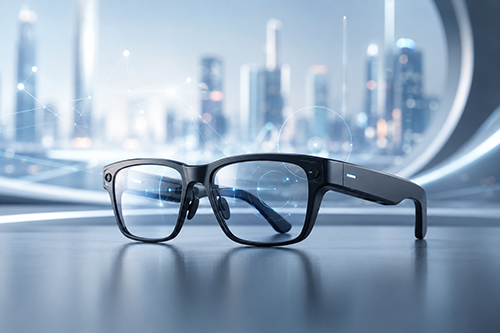
Google is bringing smart glasses back into the spotlight with its latest “Intelligent Eyewear” strategy built around Android XR and Gemini AI. Unlike earlier generations of wearable displays that focused heavily on futuristic AR experiences, Google’s latest approach places more emphasis on practical, everyday assistance that can work naturally through glasses.
At Google I/O 2026, the company confirmed two main categories of intelligent eyewear: Audio Glasses and Display Glasses. Audio Glasses are expected to arrive first, with a launch planned for fall 2026, while display-equipped models will follow as the Android XR ecosystem continues to develop.
The most important change is the role of AI. Rather than treating smart glasses simply as a camera, speaker, or small display, Google is positioning Gemini as the intelligence behind the wearable experience. Users will be able to ask for directions, send messages, capture photos, and receive contextual assistance without constantly taking out a smartphone. Google describes the goal as keeping users “hands-free and heads up” while still giving them access to digital information when needed.
This direction also highlights another major trend in the smart glasses industry: design and wearability are becoming just as important as technology. Google has partnered with eyewear brands Gentle Monster and Warby Parker to develop frames that look and feel closer to everyday eyewear. This suggests that the next phase of smart glasses competition will not be driven only by specifications, but also by comfort, weight, style, and how naturally the product fits into daily life.
For smart glasses distributors and retailers, this is an important market signal. As global technology companies continue investing in AI eyewear, consumer awareness of smart glasses is likely to increase. Buyers may begin looking beyond basic Bluetooth audio functions and pay more attention to AI assistance, cameras, translation, voice interaction, connectivity, and other intelligent features.
For OEM and ODM projects, the opportunity is also becoming clearer. Different markets may require different combinations of functions. Some customers may prefer lightweight audio glasses for daily communication, while others may focus on AI camera glasses, translation glasses, sports eyewear, or electrochromic smart glasses with electronically adjustable lenses.
This means product differentiation will become increasingly important. Brands entering the market should consider not only which smart features to offer, but also frame design, lens options, battery performance, wearing comfort, packaging, software experience, and private-label customization.
Google’s return to smart eyewear also shows that the industry is moving toward a broader ecosystem rather than a single product category. AI, mobile devices, voice assistants, navigation, cameras, and wearable hardware are beginning to work together more closely. Recent coverage also indicates that Google and Samsung are continuing to position Android XR as a platform that can extend across glasses and other XR devices.
For distributors, retailers, and brands, the key takeaway is simple: smart glasses are evolving from a niche wearable into a more practical AI interface for everyday use.
As the category develops, companies that can combine useful functions, comfortable design, reliable supply, and flexible customization may be better positioned to capture new opportunities in the global smart eyewear market.